Last checked: September 2026. Rules and prices change, so check the official links in this guide before you travel.
The short answer: most people cross with Le Shuttle or a Dover–Calais ferry, then drive south on the motorway via Reims and Dijon, avoiding Paris. From Calais, the Northern Alps are a long day's drive and the Tarentaise a little further, so many families break the journey in Burgundy. Before you go, make sure your car has winter tyres or chains, a Crit'Air sticker, a hi-vis vest and a warning triangle, and learn the French rules on speed, alcohol and phones. They're stricter than many UK drivers expect.
Driving means you can take everything you need, set your own timetable and explore once you're there. Here's how to get it right.
Should you take the tunnel or the ferry?
Le Shuttle (Folkestone–Calais)
Le Shuttle, the Eurotunnel car train, is the quickest way across and the one most Alps-bound drivers choose. You stay with your car for the short crossing, trains leave frequently, and the Calais terminal takes you straight onto the motorway south.
A few things to know:
- Check-in times: arrive within the window on your ticket. It's generally no more than two hours before departure, and there's a cut-off, so read your terms.
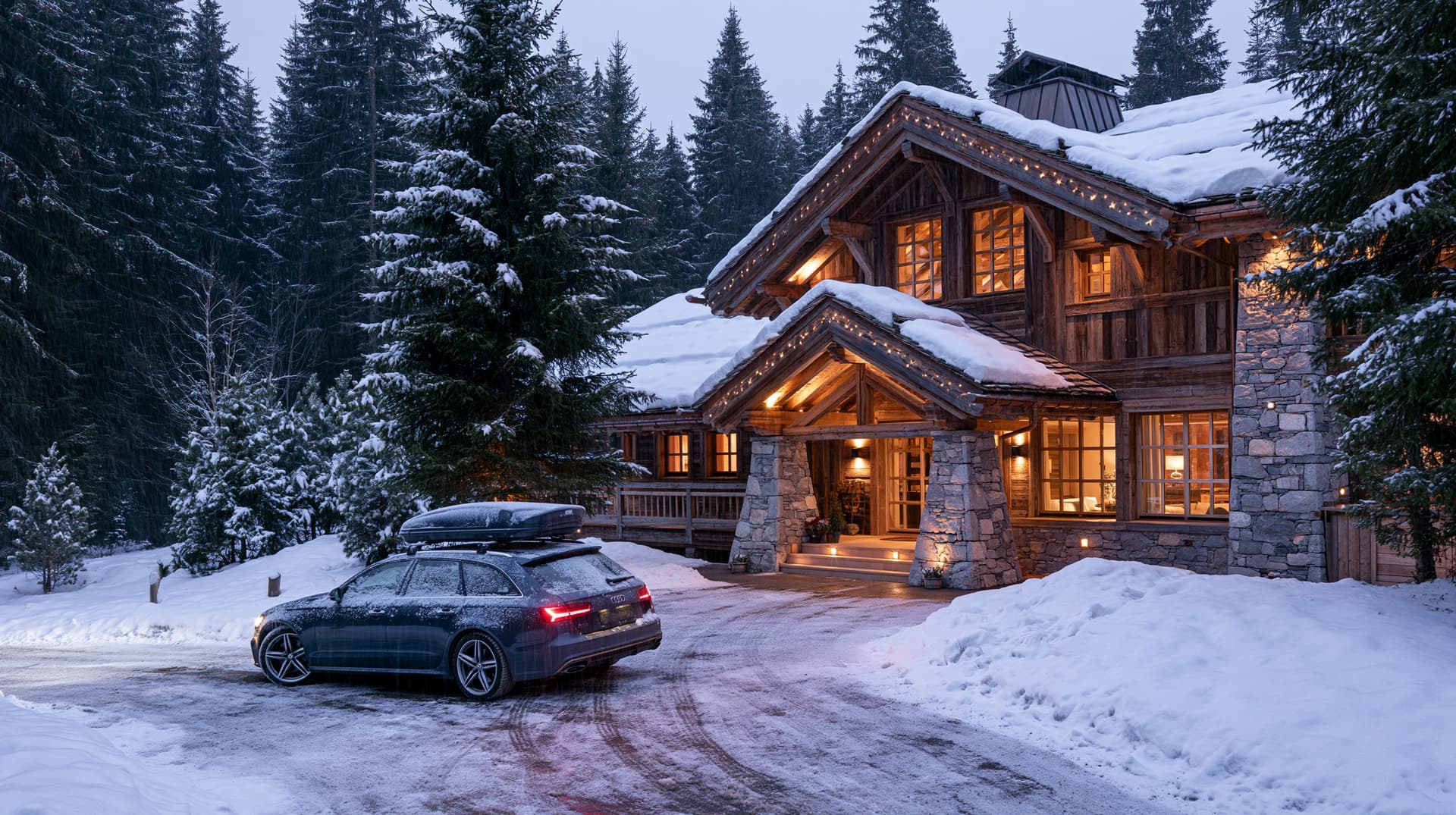
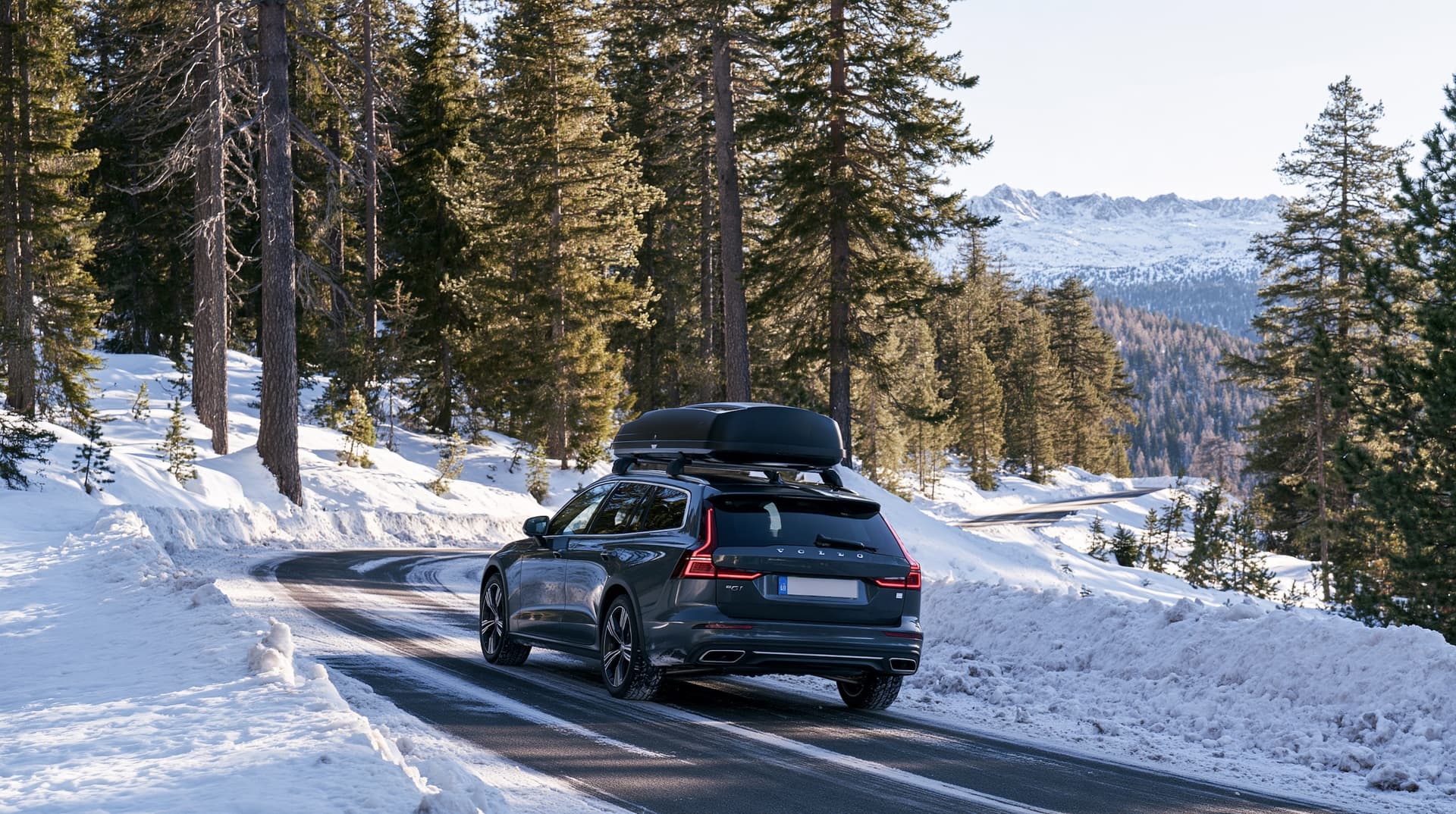
- Roof boxes: if you have a roof box, ski box or anything on the roof, declare it when you book. Taller vehicles travel in the single-deck carriages.
- Gas-powered cars can't travel. That includes LPG and other gas-fuelled vehicles, and there are strict limits on carrying spare fuel.
- Flexible tickets cost more but take the stress out of a long drive. If you're driving from the north of England or travelling at peak times, the extra flexibility can be worth it.
- Electric cars: there are rapid chargers at both terminals.
Ferries
- Dover–Calais (DFDS, P&O Ferries, Irish Ferries) and Dover–Dunkirk (DFDS) take longer than the tunnel. The upside is a proper break on board: a meal, a walk and a rest before the long drive.
- Newhaven–Dieppe (DFDS) can suit drivers from the south coast.
- Portsmouth to Caen, St Malo or Cherbourg (Brittany Ferries) lets you sleep in a cabin overnight and arrive rested, but the drive to the Alps from Normandy or Brittany is longer. Brittany Ferries is closing its Portsmouth–Le Havre and Poole–Cherbourg routes this autumn, so check what's running when you book.
If you land in Normandy, the A13 and A14 motorways near Paris use free-flow tolls, with no booths. You must pay online within 72 hours (or have a toll tag), or you'll face a fine. How free-flow tolls work
Border checks: allow extra time
The EU's new Entry/Exit System (EES) replaces passport stamps with a digital record. At Dover and Folkestone, French border officers are currently creating these records manually while you stay in the car. The self-service kiosks for fingerprints and photos aren't in use for cars yet, but they could be switched on during the season. Allow extra time, especially in school holidays.
The EU's separate online travel authorisation, ETIAS, is due to start in late 2026. Check gov.uk's France travel advice before every trip.
What's the best route from Calais to the Alps?
The classic route avoids Paris completely:
Calais → A26 (Reims, Troyes) → A5 → A31 (Dijon) → A39 (Bourg-en-Bresse) → A40 (towards Geneva)
- Morzine, Les Gets and Avoriaz: leave the A40 at Cluses and follow the valley road up.
- Chamonix: stay on the A40 to the end of the motorway, then carry on up the valley.
- Méribel, Courchevel, Val d'Isère and Tignes: either continue from the A40 onto the A41 past Annecy and Chambéry towards Albertville, or take the A6 at Mâcon and go around the east of Lyon on the A432 and A43. Both routes finish on the N90 up the Tarentaise valley.
The A40 runs south of Geneva on French soil, so you don't need a Swiss motorway vignette unless you choose to go through Switzerland. If you do, buy the e-vignette only from the official Swiss site.
How long does it take?
| From Calais to | Approximate driving time |
|---|---|
| Chamonix | 8 to 9 hours |
| Morzine, Les Gets, Avoriaz | 8 to 9 hours |
| Méribel, Courchevel | 9 to 10 hours |
| Val d'Isère, Tignes | 9.5 to 10.5 hours |
These are driving times only. From London, allow roughly 11 to 14 hours door to door once you add the drive to Folkestone or Dover, check-in, the crossing, breaks and the one-hour time difference. Many chalets ask guests to arrive in the afternoon or early evening, so plan backwards from that.
Tolls and Bip&Go
Almost all of the motorway route is tolled. Budget roughly €60 to €70 each way from Calais to the Northern Alps, and more for the Tarentaise. Prices usually rise each February, and a tall roof box can move some vehicles into a higher price class. For an exact figure, use the Sanef and APRR route calculators.
Paying at the booth: most toll booths take UK Visa and Mastercard, including contactless. American Express is accepted less widely. Avoid the lanes marked only with a "t", which are for toll tags.
Ticket-free entries: some Savoie motorways are removing their entry barriers, so you may not collect a ticket when you join. You still pay as normal at the exit.
Is Bip&Go worth it?
Bip&Go is a French toll tag that sits behind your windscreen. You drive through the "t" lanes at up to 30 km/h, and the barrier lifts on its own. On a busy Saturday that can save a long wait. The tag also works on free-flow motorways, in many French car parks, and in Spain, Portugal and (as an option) Italy.
- Costs: there's a pay-as-you-go plan charged only in the months you use it, plus a one-off activation fee and a delivery charge. Look out for introductory offers.
- Allow time for delivery: delivery to the UK can take a couple of weeks, so order well before you travel.
- The catch for UK drivers: bills are paid by direct debit in euros. Bip&Go says some UK banks may refuse this, so check your bank will allow it, or use an account that can pay in euros.
French driving rules UK drivers need to know
What to carry
- Documents: your photocard driving licence, the car's V5C log book (or a VE103 certificate for a hire or lease car), your insurance details and your passport.
- UK sticker: not needed if your number plate shows "UK" with the Union flag. You need one if your plate shows GB, a national flag or no identifier. Remove or cover any old GB sticker.
- Hi-vis vest: kept within reach of the driver, not in the boot. Carrying one for every passenger is sensible. Put it on before you get out after a breakdown.
- Warning triangle.
- Headlamp beam deflectors, or adjust your headlights if your car can, so you don't dazzle oncoming drivers.
- Breathalyser: no longer a legal requirement, despite what some shops still say.
- Recommended: spare bulbs, a first-aid kit, an ice scraper, de-icer, winter screenwash, a torch and a small shovel.
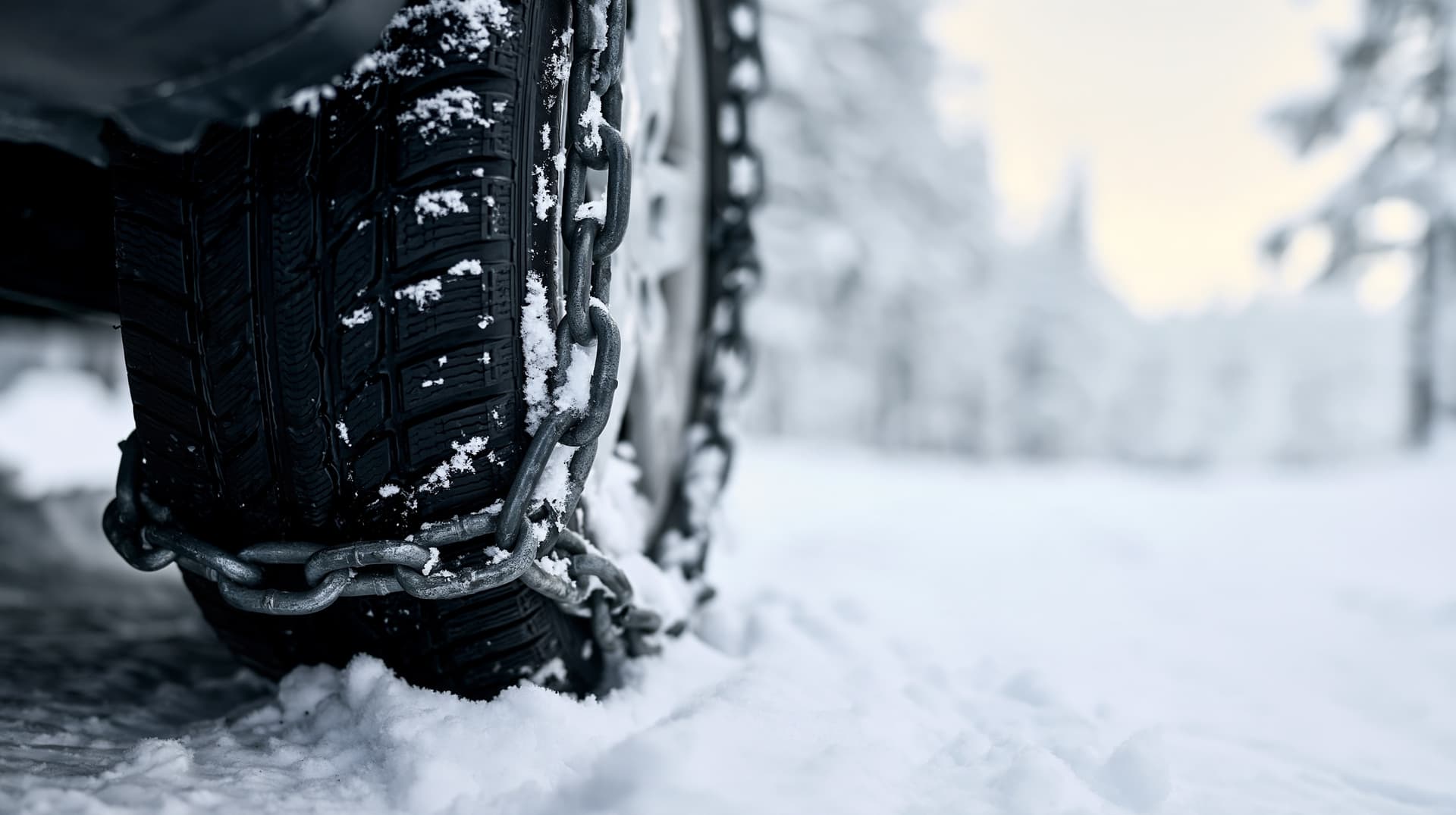
Winter tyres and snow chains
Under France's mountain law (loi Montagne), from 1 November to 31 March, drivers in mountain areas, including all of Haute-Savoie and much of Savoie and Isère, must either:
- have four winter or all-season tyres with the 3PMSF symbol (a three-peak mountain with a snowflake), or
- carry snow chains or snow socks that fit the car's driving wheels.
Tyres marked only "M+S" no longer count. A sign reading équipements spéciaux obligatoires means chains or socks must actually be fitted, even if you have winter tyres. Police can stop you going further, and your insurer may not pay out if you have an accident without the right equipment.
Practise fitting your chains at home, on a dry driveway, not in a snowy lay-by in the dark.